Every once in a while, I get into a “movie rewatch marathon” mode. This is especially true of much older films because there is a sense of familiarity, and to see how well they stand the test of time.
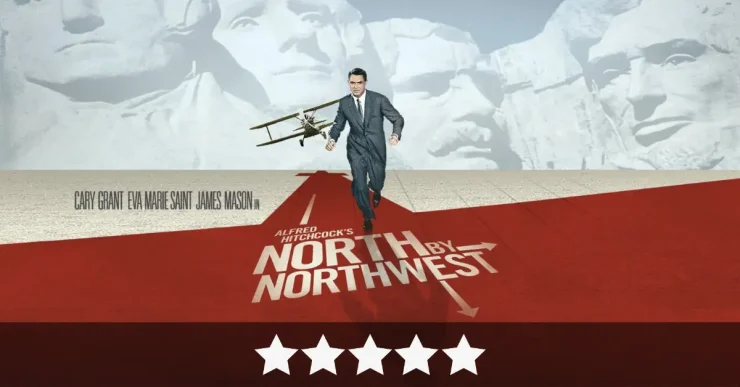
Earlier this week, there was news of Eva Marie Saint passing away. That instantly brought back memories of Alfred Hitchcock’s 1959 classic, North by Northwest. As a teen, I remember watching it on one of those video cassettes, and later bought the DVD too.
It’s one of those films where almost everything falls into place. The writing by Ernest Lehman, the performances, the pacing, the cinematography, the humour, the music, the suspense and, above all, the sheer pleasure of storytelling.
Cary Grant is magnificent as Roger Thornhill, the Madison Avenue advertising executive. A case of mistaken identity drags him into an absurd and dangerous adventure. Grant’s timing, his expressions, and dry wit are a treat to watch. It’s also amazing how he manages look debonair in that suit even in the most awkward of situations.
Eva Marie Saint as Eve Kendall is cool, elegant, intelligent, and mysterious. There is a lovely ambiguity to her character, and she plays it with aplomb. Her chemistry with Grant is wonderful. This is particularly so in the train sequences, where the camera beautifully captures their verbal flirting and sparring amidst the underlying tension.
The supporting cast is equally effective. Both James Mason and Martin Landau bring an element of sophisticated menace. Nobody seems to be doing too much, and that is part of the film’s great charm.
Besides the acting, it has some of the most iconic scenes ever filmed.
The 10 minute crop-duster sequence in a vast, open, and desolate landscape is legendary, including how they filmed it. A masterclass in suspense. The James Bond film, From Russia, With Love replicated a part of this scene.
Then there’s the scene at the United Nations. Officials did not grant them permission to shoot there, but they used hidden cameras and went ahead anyway. The auction-room episode, the train journey and then that mad, final dash atop the Mount Rushmore monument all maintain the pace.
I was both disappointed and amazed that they recreated the Mount Rushmore sequence on a soundstage as filming there was not allowed. Another fascinating trivia: Vandamm’s lovely house was also a set construction.
All these tidbits and behind-the-scenes look as well as making of the film itself are showcased in the 2000 documentary, Destination Hitchcock: The Making of North by Northwest, hosted by Eva Marie Saint.
The music deserves a special mention. Bernard Herrmann’s score is an essential part of the entire experience. From that energetic opening with its sense of anticipation to the dramatic suspense, the music gives the film an extraordinary pulse. Saul Bass designed the title sequence using “kinetic typography”, a term I read about much later.
Watching the film now, it’s amazing how much it accomplishes without relying on the visual excesses or frenetic editing that have become commonplace in modern thrillers. Of course, some aspects belong unmistakably to another era, like the attitudes, clothing, manner of speaking, and the conventions of romantic relationships.
Perhaps that is one of the special pleasures of revisiting old films. You notice things you may have missed the first time around. It is a wonderfully entertaining piece of cinema, full of style, wit, and romance. Watching it again is so enjoyable even though you know the story and famous sequences.
North by Northwest remains one of my all-time favourites.