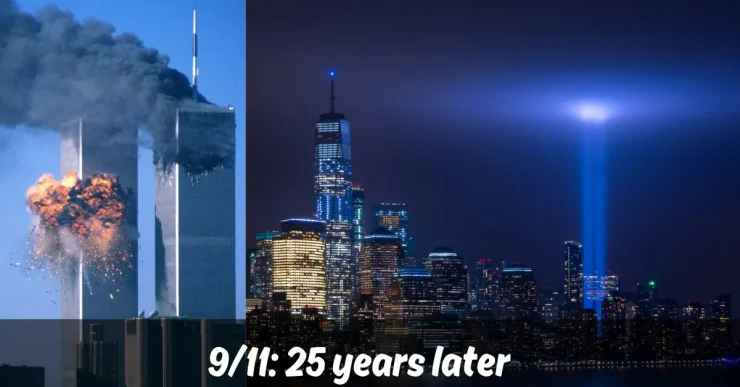
Twenty five years since the events of 9/11.
In India, it was early evening. I was attending a class at SIBM, Pune (Symbiosis Institute of Business Management). Some classmates mentioned listening to news and watching clips of a plane hitting the World Trade Centre in New York.
At home, I remember sitting glued to the TV, as if it was some Hollywood disaster movie instead of the news. Watching the twin towers being hit one after another and then going down felt surreal, and it was obvious the world would never be the same again.
Younger folks today won’t understand how shocking it was to watch all this in real time. There were no smartphones, no social media, no livestreams, no being “always online”. For many of us, TV was the window through which we watched history unfold.
A reminder of the events of that day: 19 terrorists associated with al-Qaeda hijacked 4 commercial airplanes. Two planes struck the Twin Towers of the World Trade Center in New York City. A third hit the Pentagon just outside Washington, D.C. The fourth plane, thanks to the heroic resistance of passengers, crashed in a field in Shanksville, Pennsylvania. The attacks claimed close to 3,000 lives, and an estimated 5,000 more over the years due to related health issues.
The deadliest terrorist act ever.
The most immediate and permanent shift happened in the skies and at terminal gates. There was a time we could see off folks till the boarding gate, or even till the tarmac (in smaller airports). Airport security was more of a routine formality, with a wave of the metal detector and a glance at the photo ID and boarding pass.
Within days, all of that went for a toss. The U.S. created the Transportation Security Administration (TSA), and governments worldwide overhauled their security systems. Laptop and mobile trays for separate checks, only a small quantity of liquid allowed, cockpit doors were further reinforced. Later, after another incident, even removing shoes became compulsory.
This security paranoia wasn’t restricted to airports. It crept into daily life everywhere, including India. I remember visiting Bangalore, Chennai, and Hyderabad in October 2001. The change in surroundings and sense of tension everywhere was palpable.
Additional security checkpoints at airport approach roads, high-security zones, baggage scanners at every hotel entrance, metal detectors at shopping malls. Opening the car trunk, mirror check under the engine compartment, and x-raying bags before stepping inside a public building soon became the new normal.
Given the magnitude and scale of these attacks, there were bound to be a truckload of opinions and theories. There are enough 9/11 conspiracy videos on YouTube to disappear down a rabbit hole, and many experts and scientists have debunked several such theories. Some just refuse to go away, and get a fresh lease of life every few years.
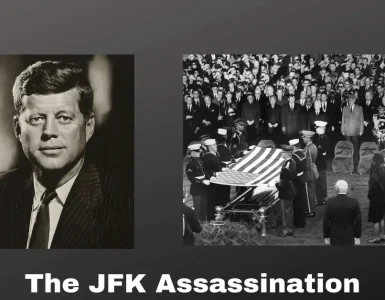
I’ve watched several documentaries and videos about 9/11 myself over the years. Mostly out of curiosity, and at times because it seems unreal that even many years later “new facts” come to light, very much like the JFK Assassination, which is an even older event.
There are also stories about several heroes that day; both in the air and on the ground. One story I found particularly poignant is that of 24-yr old Welles Crowther, the Man in the Red Bandana, who used a red bandana to cover his face as he guided survivors down dozens of dusty and smoky flights of stairs in the South Tower before losing his life.
There are many haunting images of that day too, none more so than of The Falling Man. Frozen mid-air, capturing the impossible choice faced by those trapped above the impact zone in smoke and heat.

Officially, his identity still remains unconfirmed. Initially thought to be Norberto Hernandez, his family said it wasn’t him when they saw the entire sequence of photos. Currently, he’s believed to be Jonathan Briley, a sound engineer working at the “Windows on the World” on the 106th floor of the North Tower.
25 years later, the dust may have settled, but its footprint remains on every boarding pass and security queue. A grim reminder of how fragile our routines really are, and how quickly things can change in a matter of minutes.